Author name: Yubl

A Modern Guide to Countertop Edge Profiles: Which Are Out of Date?

A Modern Guide to Countertop Edge Profiles: Which Are Out of Date?

When homeowners plan a kitchen or bathroom remodel, most of the attention goes to countertops, cabinets, and colors. However, there is one design detail that quietly shapes the entire look of your space: the countertop edge profile.

Countertop edges influence not only aesthetics but also safety, maintenance, and resale appeal. Some profiles feel timeless and modern, while others instantly date a kitchen. In this modern guide, we will break down standard, premium, and custom countertop edge profiles, plus highlight which styles are now considered out of date and which ones homeowners prefer today.

Beyond pure appearance, the edge you choose impacts the daily ergonomics of your home. A sharp, crisp edge might provide the architectural precision desired in a contemporary loft, but a more rounded profile like a quarter round or half bullnose can be a safer, more comfortable choice for high-traffic family kitchens where bumps and spills are common. By understanding the functional pros and cons of each shape, you can select a profile that enhances both the longevity of your stone and the overall flow of your room.

Understanding Countertop Edge Profiles

A countertop edge profile refers to the shape cut along the exposed edges of your countertop. While subtle, this detail plays a major role in how your kitchen or bathroom feels, whether sleek and modern or traditional and ornate.

Edge profiles typically fall into three categories:

  • Standard – Clean, affordable, and versatile
  • Premium – More decorative with added depth
  • Custom – Fully tailored, statement-making designs

Let’s explore each and see how modern preferences are shifting.
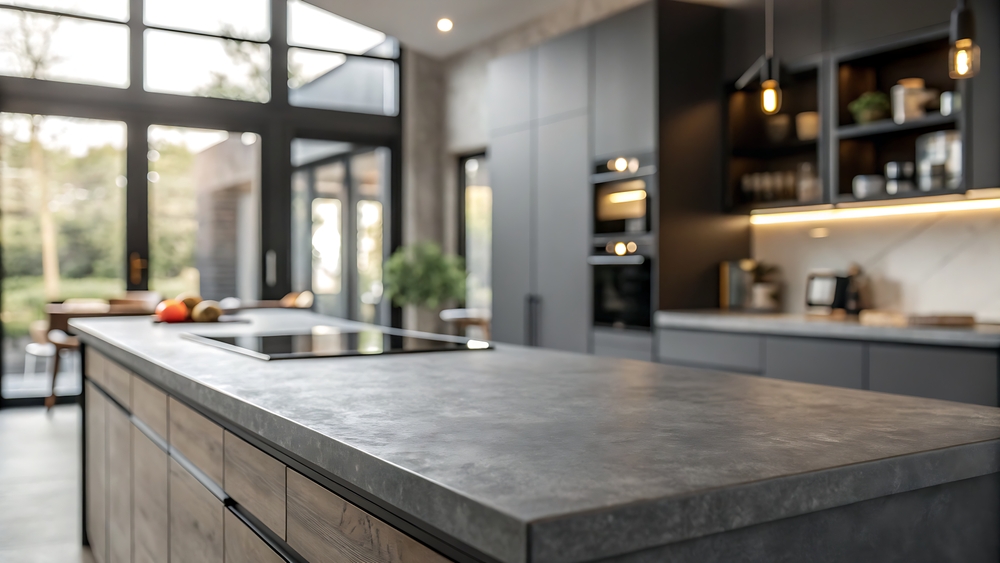
Standard Edge Profiles: Clean and Timeless

Standard edge profiles remain the most popular choice for modern homeowners, especially those prioritizing simplicity and resale value.

Eased Edge

The eased edge is the most widely used profile today. It features a slightly softened square edge that feels modern, clean, and safe. This edge works beautifully in contemporary, minimalist, and transitional kitchens.

Why it is still in style:

  • Minimal and modern
  • Easy to clean
  • Complements quartz, granite, and marble


Quarter Round

The quarter round edge has a soft curve that adds subtle detail without overwhelming the design. While not as sharp as an eased edge, it still feels neutral and functional.

Modern use: quarter round edges are often chosen by homeowners who want a slightly softer look while keeping things understated.

Premium Edge Profiles: Elegant but Selective

Premium edge profiles introduce more character and detail. While still popular, they are best used intentionally.

Bevel

A bevel edge features an angled cut, offering a sleek architectural look. Modern bevel edges are typically subtle rather than dramatic.

Best for:

  • Contemporary or industrial designs
  • Homeowners who want a touch of definition

Half Bullnose

The half bullnose rounds the top edge while keeping the bottom flat. It is softer than a bevel but still relatively modern when done minimally.

Still relevant when:

  • Used in transitional kitchens
  • Paired with simple cabinetry

Dupont

The dupont edge combines a soft curve with a step detail underneath. It is elegant, but it can feel heavy if overused.

Modern tip: dupont works best in upscale homes with simple surfaces and limited ornamentation elsewhere.

Outdated Edge Profiles: What Modern Homeowners Avoid

Some countertop edges that were once popular now feel overly decorative or dated.

Full Bullnose

The full bullnose edge is completely rounded on the top and bottom. While it was once praised for safety, it now feels bulky and old-fashioned in modern homes.

Why it is out of date:

  • Lacks clean lines
  • Looks heavy on thick countertops
  • Often associated with early 2000s kitchens

Ogee

The ogee edge is highly decorative with an S-shaped curve. While it still has a place in luxury traditional homes, it is generally avoided in modern design.

Modern verdict: ogee edges can overpower today’s sleek cabinetry and minimalist layouts, making kitchens feel dated.

Custom Edge Profiles: Modern Luxury

custom edge profiles allow homeowners to tailor their countertops to match their personal style and home architecture.

custom edges often blend elements of eased, bevel, or dupont profiles into something unique and refined. These are common in luxury homes and high-end remodels.

Why homeowners choose custom edges:

  • Unique, one-of-a-kind look
  • Tailored to slab thickness and material
  • Adds subtle luxury without being flashy

How to Choose the Right Edge for Your Home

When selecting a countertop edge, homeowners should consider:

  • Overall design style: Modern homes favor clean, simple edges.
  • Countertop material: Quartz and marble pair well with eased or bevel edges.
  • Maintenance: Simpler profiles collect less dirt.
  • Resale value: Neutral styles appeal to more buyers.

For most homeowners today, eased, subtle bevel, and minimalist custom profiles offer the best balance of style and longevity.

Final Thoughts: Modern Means Simpler

Trends in countertop edge profiles have shifted toward simplicity. While ornate designs like full bullnose and ogee once dominated kitchens, modern homeowners prefer clean lines and understated elegance.

If you want a kitchen or bathroom that feels current and stays that way, stick with standard profiles like eased or quarter round, consider premium edges sparingly, and explore custom options if you want something truly refined.

A small detail like a countertop edge can make a big difference, and choosing the right one ensures your space looks modern, functional, and timeless for years to come.

A Modern Guide to Countertop Edge Profiles: Which Are Out of Date? Read More »

Amazing Tools For Generating Marketing Blogging Ideas

Writing content that will snatch away your reader’s attention can be tough. You definitely want content that will get them to read it, share it, and comment on it. If you go to social media, you’re going to be surprised that a huge percentage of successful blogs are due to this strategy. 

Planning to start a writing blog but don’t know where to start?

You’ve come to the right place because we’re going to share some amazing tools that will help you generate marketing blogging ideas that will reach thousands of people from around the globe.

Are you currently using a blogging tool? Let’s see below if it’s included on our list:

Tools To Getting Blog Ideas:

1. LinkedIn Pulse

LinkedIn is one of the most notable platforms to connect with professionals from different parts of the world. LinkedIn Pulse helps you pull content from the people in your LinkedIn network and channels that you follow. It is a great tool to generate new blog ideas.

On your homepage or feed section, you’ll see different posts from people. You can also get ideas from there, or you can check Facebook, Twitter, Google+ trending sections to help you get started. 

2. BuzzSumo

Buzzsumo will list the most popular blogs on the topic you searched for, rather than just giving you a list of title ideas. 

You’ll get a wealth of information on what content performs best. In the Buzzsumo search box, enter a URL or topic, and it’ll analyze the content with the most engagement on social media.

The tool can be used for free though it has a limited number of features. It’s still a must-have tool.

3. Quora

This website can help lead you to the types of questions real people are asking. Simply follow topics related to your niche, search for your keywords, or read content related to your blog’s focus. There are tons of questions  that you can answer in-depth with a blog post. You can even interact with other people to see what topics they’re curious about and see what can be valuable for blog ideas.

4. Portent Title Maker

This quite often gets compared to HubSpot and Buzzsumo. This topic generator is one of the best tools out there. It’s super easy to use, and you just have to enter a particular topic or subject into the Portent tool. Then you’ll get sample blog titles, along with a witty and helpful guide on why the title can be successful. 

After searching for a title, they offer even more resources to help you create a content strategy around your newly generated topic as you scroll down the page.

Not happy with the result from your search?

Just click the refresh symbol for new ideas, as it continuously comes up with new blog titles based on your subject.

5. Google Trends

Google trends (https://trends.google.com/trends/) is not specifically a tool to generate blog titles. It is mainly used to gauge interest and perform market research on a particular topic. However, it’ll help you gather market data from google trend topics, inspiring you to take your title in a fresh and creative direction. 

This tool is used primarily to gauge interest in topics, and to browse related queries and content. The related queries can help you see what your target reader is looking for. Google Trends can also help you garner insight into what’s popular and where in the world your readers are.

Having the correct data for your chosen topic can aid you in improving your content strategy to make a more significant impact on your readers. 

6. Ahrefs

Have you ever tried using ahrefs? If you haven’t, then you should start using this tool. 

Ahrefs is one of the popular tools for digital marketers and one of my absolute favorite tools for generating blog ideas. All of the data can be overwhelming, and it isn’t cheap, so you can always reach out to a Denver SEO consultant for assistance. You can check your competitor’s backlinks and anchors and see the organic keywords they’re ranking for on specific topics similar to yours. In the keyword explorer section, you can put keywords or topics that you’re aiming to target, and you’ll have tremendous results showing which topics, questions, and keywords are driving traffic value. 

There’s even a “Content Explorer” section in which you can search for a specific topic or keyword; it will give data of pages, titles, URLs, and websites associated with your search. 

Ahrefs will surely help you generate marketing blogging ideas. Just make sure to take your time to learn how to use the tool since it can be pretty confusing at first.

RECAP

The internet is home to many tools that can help inspire you when coming up with new blog topics and when your creativity starts to subside. It can be draining to generate ideas but don’t be afraid to get a little help. 

What’s your favorite tool to use?

Amazing Tools For Generating Marketing Blogging Ideas Read More »

Benefits Of Going Green For Roofing Companies

An appreciable percentage of homeowners demonstrate the desire to help the environment. One eco-friendly effort is the construction of an environmentally-conscious roof.

Capitalizing on this belief, an increasing number of roofing companies have made the decision to go green.

Going Green Overview

You have likely heard the term going green used with greater frequency in recent years.

In its most basic definition, the phrase references committing yourself to improve the environment.

This means engaging in actions that help keep the atmosphere aesthetically-pleasing and placing less strain on the earth’s natural resources, such as air, water, soil, and trees.

Going Green’s Application To The Roofing Industry

Going green has transcended well beyond individual efforts. Many businesses, companies, and organizations representing a wide array of industries now follow this mantra.

One such sector is roofing. If you own a residence or business, you understand how crucial a strong and durable roof is to numerous aspects of your personal, physical, and financial well-being.

That said, numerous roofing establishments have committed to running their businesses and performing the important work they do, with environmental health in mind.

There are certain notable ways in which your roofing entity can practice environmental sustainability, including:

Employ Eco-Friendly Materials

Numerous materials used in roof construction or repair projects are strong, durable, and provide a relatively favorable visual appeal. However, certain products stand out because they do not harm the environment, such as:

*Metal

*Slate

*Wood

*Clay

These products hail from abundant resources or can be molded together using natural materials.

Embrace Natural Energy Sources

Your roofing company can also adopt a green philosophy by embracing the use of natural energy.

Many roofing projects can include endeavors designed to capitalize on natural resources and use said assets as energy producers.

Specific examples are solar panels, which may be used to generate electricity.

Another case in point is a living roof. As the name might suggest, living roofs are structures covered by plant life and equipped with other features, like a waterproofing later and possibly irrigation and drainage systems.

How Going Green Benefits Roofing Companies?

Adhering to green principles might yield your roofing company several key benefits such as:

Reduced Waste

Environmentally-sustainable materials place little, if any, stress on the environment. Excess materials that are not eco-friendly often end up in landfills and can pollute important natural resources like soil and water.

Financial Benefits

Eco-conscious roofing establishments might receive financial incentives.

The importance of environmental sustenance has inspired many government entities to offer rewards like tax credits to persons and businesses that commit to going to green.

Moreover, establishments capable of executing eco-favorable could garner a significant degree of business from residential and commercial proprietors interested in undertaking such projects.

Community Improvement

Your company could play a significant role in improving the overall health and well-being of community members.

Environmentally-feasible roofing projects not only enhance a home or building’s visual appeal but could significantly improve the health and quality of life of those residing in, working at, and frequenting such locations.

Benefits Of Going Green For Roofing Companies Read More »

What Affects How Much A New Roof For My Home Will Cost?

Although roofs are built to last for several decades, there eventually comes a time when the structure needs to be replaced to maintain the protection of the building. Many homeowners are unsure how much the feature will cost to ensure they can prepare for the expense. If you’re planning to install a new roof on your home, there are a few factors that affect the overall cost of the labor and materials.

The Size of the Roof

One of the main factors determining how much you’ll pay for a new roof is the size of the current structure. The size of your current roof will influence how many materials you’ll need and the number of hours it’ll take to complete the project. If you live in a larger home, you may even need multiple roofers to install the roof, which can increase the cost. 

You’ll also have to factor in the cost to remove the current roof. Ask your Denver roofer if the estimate they provide you with includes the cost of tearing off the current structure. This is often an added fee because it requires extra time and energy before the new roof can be installed.

Different Components of the Roof

Keep in mind that not all roofing structures are exactly the same, which means each estimate you receive is specific to the unique design of your roof. The different roofing system components will affect the overall cost of the roof install, which includes decking, vents, and underlayment. The roofer will also ask if there are certain issues you experienced with your current structure, including ice dams in the winter season, and will require installing additional ventilation. Although these added features are known to increase the cost of the new roof, you can save more money if you have them added separately instead of all at once.

The Materials You Select

The roofing material you choose to install on your home is one of the main factors that will affect how much you have to pay. There are various roofing materials available in the industry, including clay tiles, slate tiles, and asphalt shingles. The cost of the materials varies greatly, making it necessary to research the average price in advance. You can also consider the climate where you live to determine which materials will offer the most insulation to your home and last the longest. The style and architecture of your home will also determine which materials will look most attractive.

Asphalt shingles are the most popular option and are known to be the most affordable, with a lifespan of 20 to 30 years. Slate tiles are the largest investment but can last an average of 100 to 150 years.

Additional roofing materials to consider include:

– Wood shakes

– Metal panels

– Clay tiles

Accessibility of the Roof

The roofing company that you hire will review how the roof can be accessed, which will be factored into the overall cost of the project. This will determine the type of equipment they need to use or rent to access the roof and begin installing the materials. The accessibility of the roof will also determine how long the project takes to complete.

What Affects How Much A New Roof For My Home Will Cost? Read More »